
4.2kg

PiPER 6-DoF
Lightweight Robotic Arm
Core Performance Metrics
1.5kg
Payload
626mm
Reach
±0.1mm
Repeatability
Lightweight, High Performance
A lightweight 4.2kg desktop robotic arm with a 1.5 kg end-effector payload, making it easy to move and deploy for real-world tasks such as grasping and assembly.
6-DoF Dexterity with Research-Grade Precision
Repeatability of up to ±0.1 mm, PiPER supports complex motion research, algorithm validation, trajectory replay, and continuous iteration.
Open Ecosystem for Secondary Development
Supports drag teaching, trajectory replay, and PC control. Compatible with Python, ROS 1/ROS 2, URDF, Gazebo, and Isaac Sim, taking robotics development from motion validation to sim-to-real development.
Stable Structure, Durable Robotic Arm Design
An aluminum alloy frame and resin housing provide structural strength and resistance to interference. The integrated controller simplifies wiring for cleaner, more stable deployment.
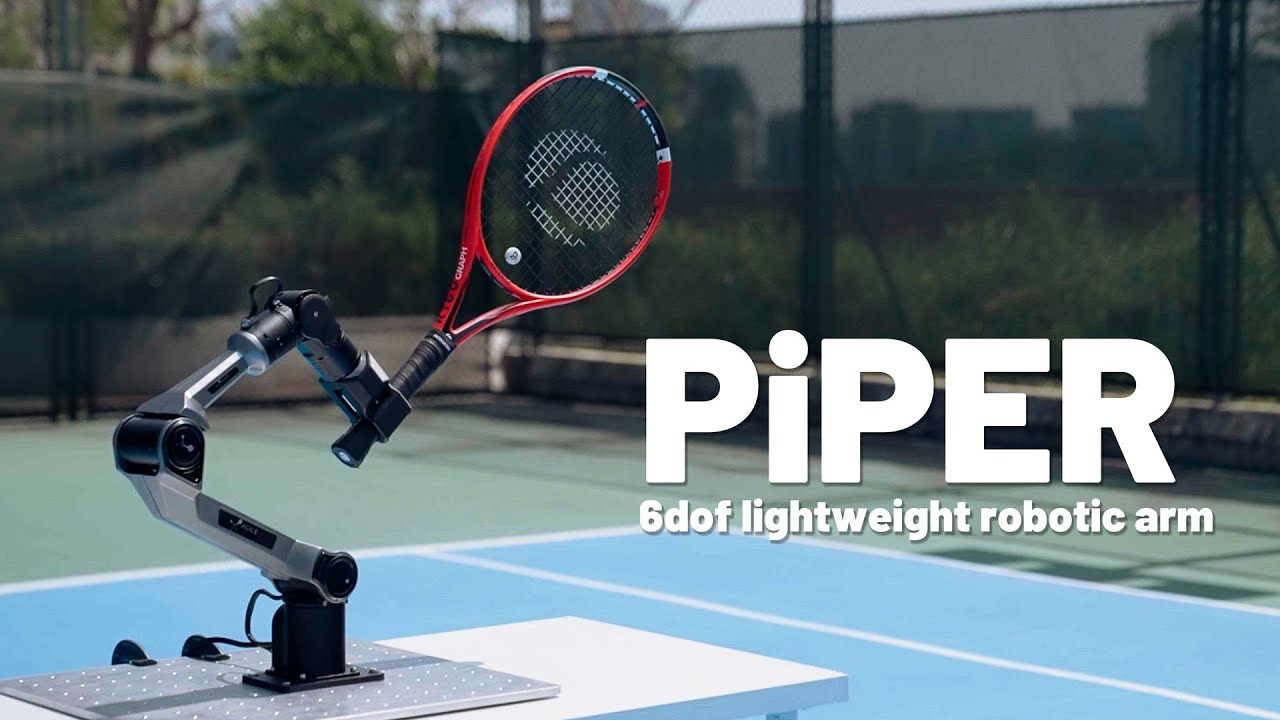
Who is Using PiPER
Serve the scalable needs of robotics research, education, algorithm development, and agile real-world robot prototyping.
Universities & Robotics Labs
For robotics education and demonstrations, manipulation and motion-control research, laboratory system integration.
Embodied AI Developers
For VLA and world model training, deployment, and validation; real-world robot data collection.
Industry Partners
For developing complete robotic solutions, including quadruped + arms, mobile robots + arms, and humanoid systems.
Individual Makers
For cost-effective desktop robotic arm development, Python/ROS-based system integration, and rapid prototyping.
PiPER User Cases
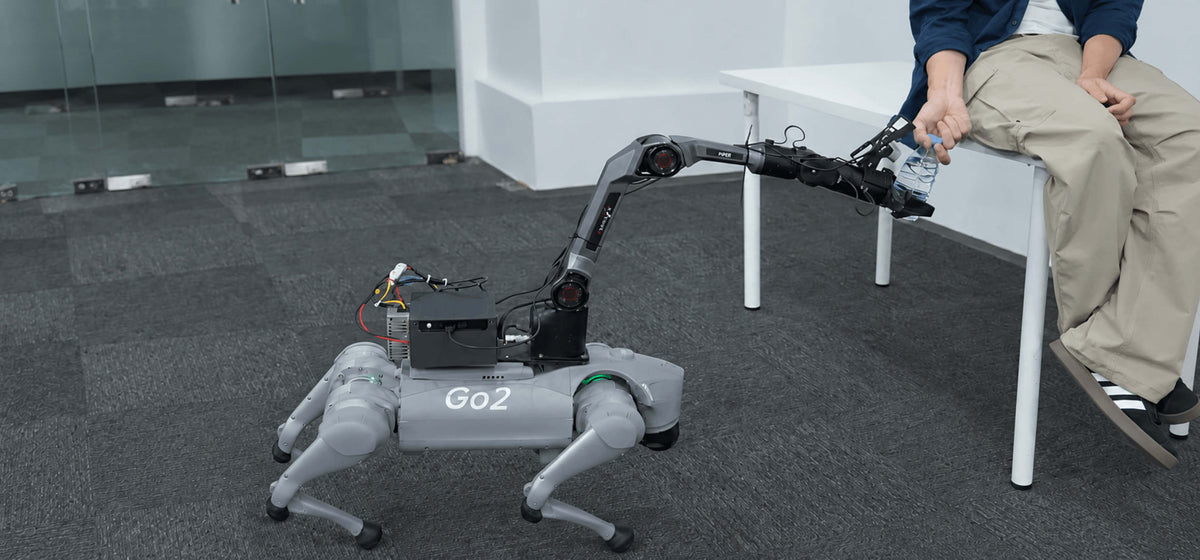
Robotics System Integration
PiPER integrates with a mobile platform for object handling and task execution in dynamic environments.
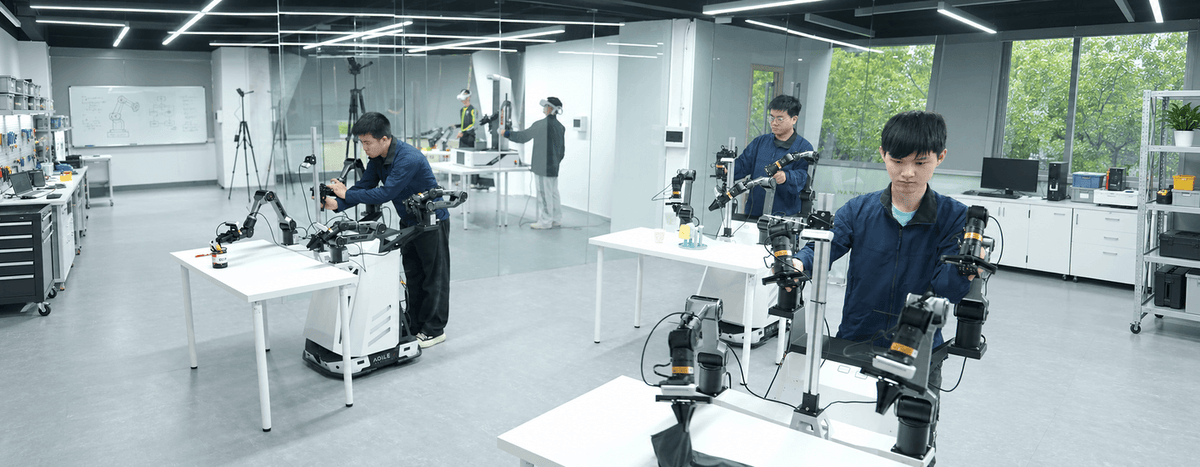
Scalable Robot Data Collection
A dedicated environment for collecting real-world robot data, supporting physical AI training, robotics dataset development, and sim-to-real research.
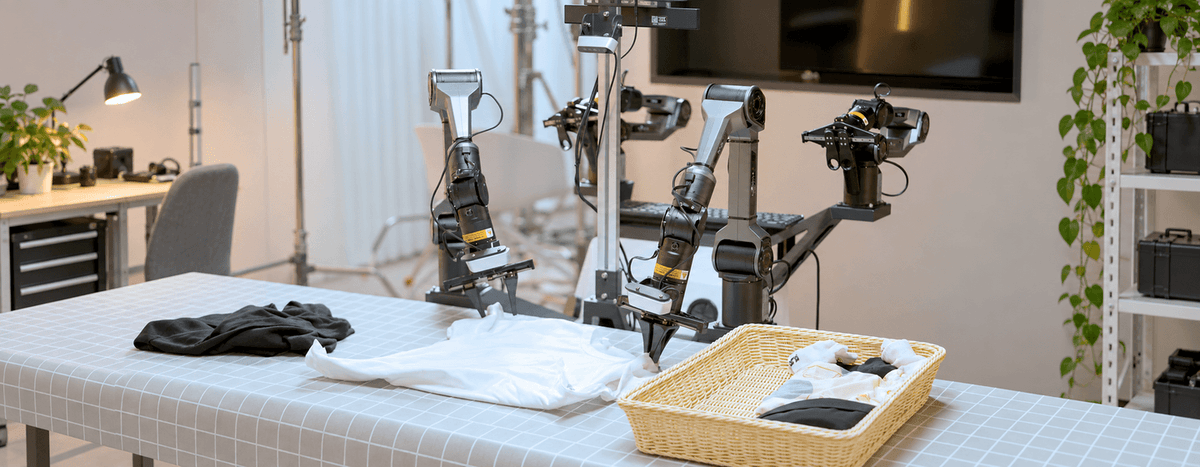
Physical AI Research
Working with vision systems, VLA models, PiPER autonomously completes real-world tasks, demonstrating embodied intelligence in action.
Complete Ecosystem
Seamless integration with industry-standard hardware and software.
Components & Accessories
Equip PiPER with multi-sensor perception, end effectors, and more development accessories.

Dexterous Hand

Desktop Stand

Depth Camera & Vision System

Gripper & Teach Pendant
Software & Algorithms
Build and validate desktop robotic arm applications with integrated control tools, open SDKs, and simulation support.
ArmRobotTool PC Control
ROS 1 / ROS 2
Python SDK
URDF & Gazebo / Isaac Sim
Related Solutions
Extend PiPER from a desktop robotic arm into complete robotic systems for mobile manipulation, physical AI research, and real-world applications.

Mobile Manipulation
SCOUT MINI COBOT is a ready-to-deploy robotics platform for mobile manipulation research, combining a PiPER 6-DoF robotic arm with the SCOUT MINI mobile robot.
Learn More
Embodied Intelligence
Four PiPER arms combined with a mobile base, computing units, and depth cameras for robotics research, intuitive bimanual teleoperation, and robot data collection in dynamic environments.
Learn MorePiPER Series Comparison
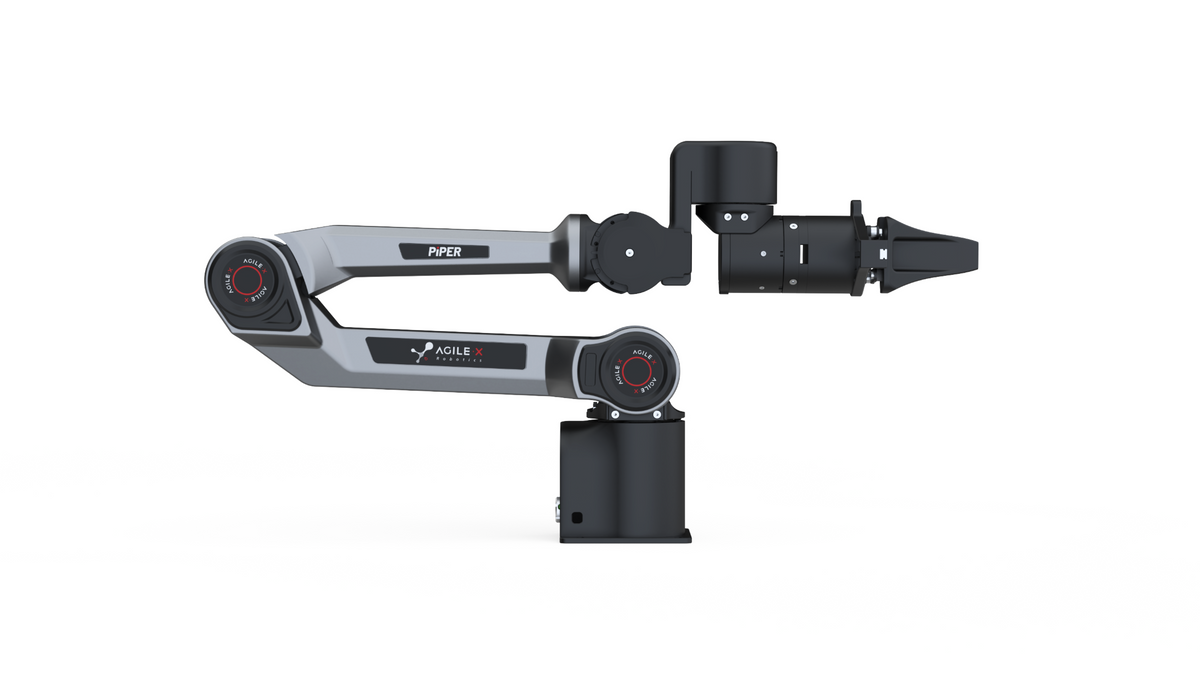
PiPER-X
Flexible Wrist
1.5 kg
Payload
669 mm
Reach
4.5 kg
Weight
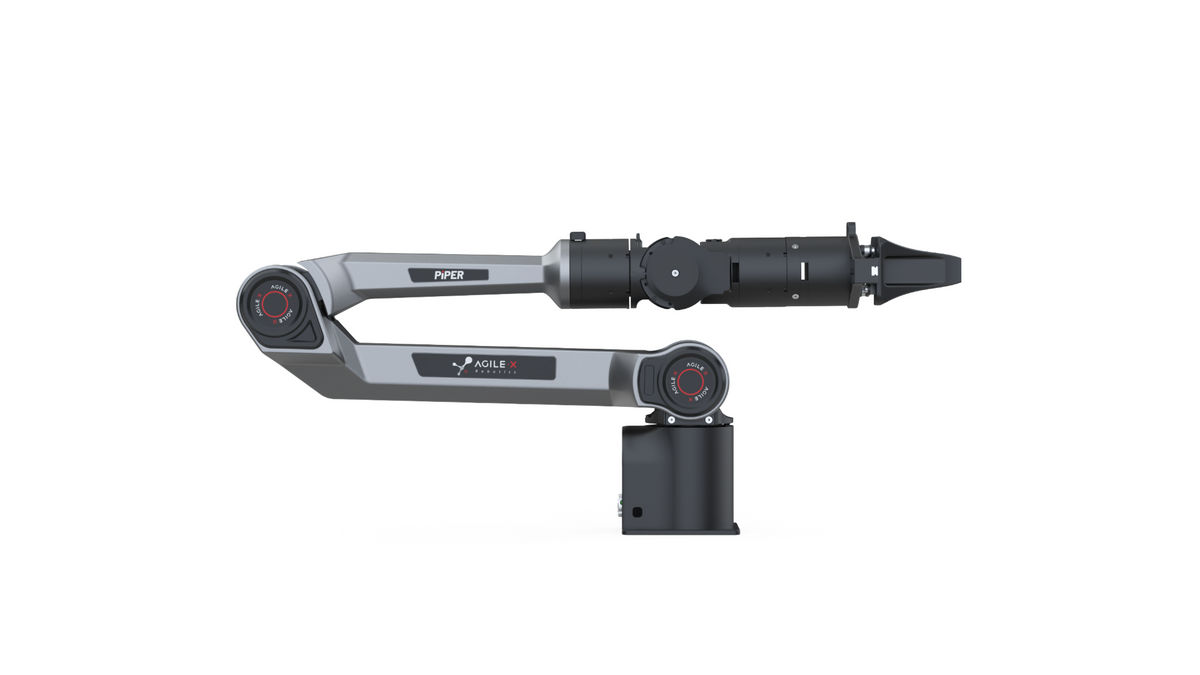
PiPER-L
Longer Reach
1.5 kg
Payload
750 mm
Reach
4.5 kg
Weight
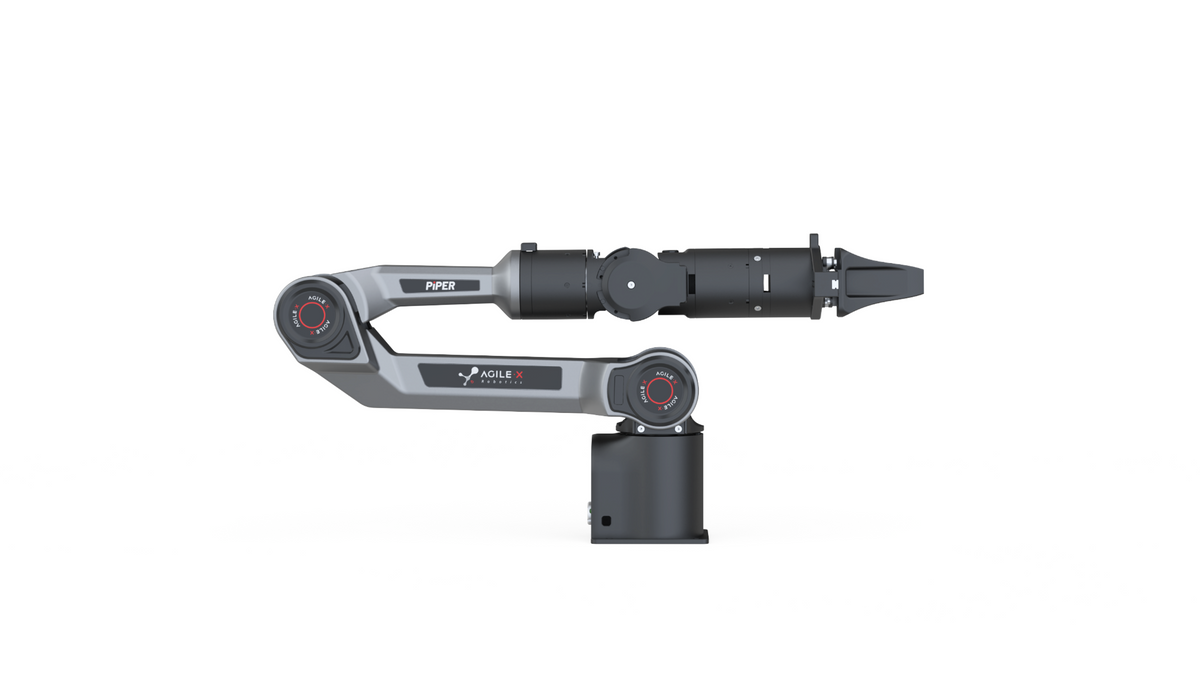
PiPER-H
Higher Payload
2 kg
Payload
636 mm
Reach
4.5 kg
Weight
FAQ
PiPER is a lightweight 6-DoF robotic arm for robotics research, education, physical AI development, and light manipulation & automation applications. With the right end-effector, PiPER can support grasping, assembly, object sorting, and robot data collection.
The standard PiPER provides a 1.5kg payload, a 626mm working reach, ±0.1mm repeatability, and a 4.2kg arm body.
Yes. PiPER supports Python SDKs, ROS 1, ROS 2, and URDF models for Gazebo and Isaac Sim, ideal for robotic arm development, algorithm validation, and sim-to-real research.
PiPER supports drag teaching, offline trajectory recording and replay, PC-based control, and programmed robotic arm motion.
Yes. PiPER can be integrated with VLA models such as π0/π0.5, OpenVLA, SmolVLA, NVIDIA Isaac GR00T, and Gemini Robotics to execute AI-generated actions on a real robotic arm. It can also work with world-model platforms such as NVIDIA Cosmos and Google Genie for simulation, prediction, data generation, and policy evaluation.AI agents such as Jev and GPT 6 can also serve as the decision-making layer, sending tasks and action commands to PiPER. Integration is supported through PiPER’s Python and ROS interfaces, with model adaptation for camera inputs, action mapping, calibration, end-effectors, and robot control.
Yes. PiPER can be integrated with mobile robot bases, quadruped robots, and other platforms to build complete systems including mobile manipulation.
Before operating PiPER, securely mount the arm, verify the power and CAN connections, calibrate the joint zero positions, and set the J6 zero point after installing an end-effector. Users should also confirm that the workspace is clear and complete a safety assessment. PiPER does not include automatic obstacle avoidance or sensing.
Technical Specifications
DoF
6
Payload
1.5kg
Weight
4.2kg
Repeatability
±0.1mm
Reach
626mm
Voltage
DC 24V
Interface
CAN
Temperature
-20~50℃
Humidity
25~85%
Mounting Dimensions
70*70mm
J5 Joint Range
±75°
J5 Joint Speed
225°/s
Tell Us Your Needs
Connect with our robotics experts to discuss your needs and discover the perfect robotics platform for your business.
AFTER-SALES
support@agilex.aiADDRESS
Head Office: XbotPark, Songshan Lake, Dongguan
Sales & Marketing: iPark, Nanshan District, Shenzhen
Thank You!
Your inquiry has been received. Our robotics engineers will get back to you within 24 hours.