

Manufacturing & Assembly
Automate line-side delivery of components, materials, and tools between storage and production areas.
Automate routine inspection, monitoring, and data collection with autonomous mobile robots for demanding industrial environments.
Large, distributed facilities make material movement slow and inefficient.
Workers spend valuable time moving tools, parts, and supplies.
Manual requests and dispatch are difficult to coordinate, track, and scale.
Late or incorrect deliveries can interrupt maintenance and production.
A configurable logistics & delivery solution that connects autonomous mobility, perception, cargo integration, and task workflows to automate internal material transport.


Maintenance personnel submit a material request through the delivery workflow. After approval, the system generates a delivery task.

After warehouse staff load the required materials, the robot follows its planned route to the assigned maintenance bay.

After completing the delivery, the robot returns autonomously to its parking location and awaits the next task.
Built for industries that need efficient, reliable material transport across factories, warehouses, service facilities, and large industrial campuses.
Automate line-side delivery of components, materials, and tools between storage and production areas.
Move goods, bins, and supplies between storage zones, workstations, and handoff points.
Deliver spare parts, tools, and maintenance supplies to service bays on demand.
Connect distributed warehouses, workshops, and operational areas through autonomous indoor–outdoor transport.
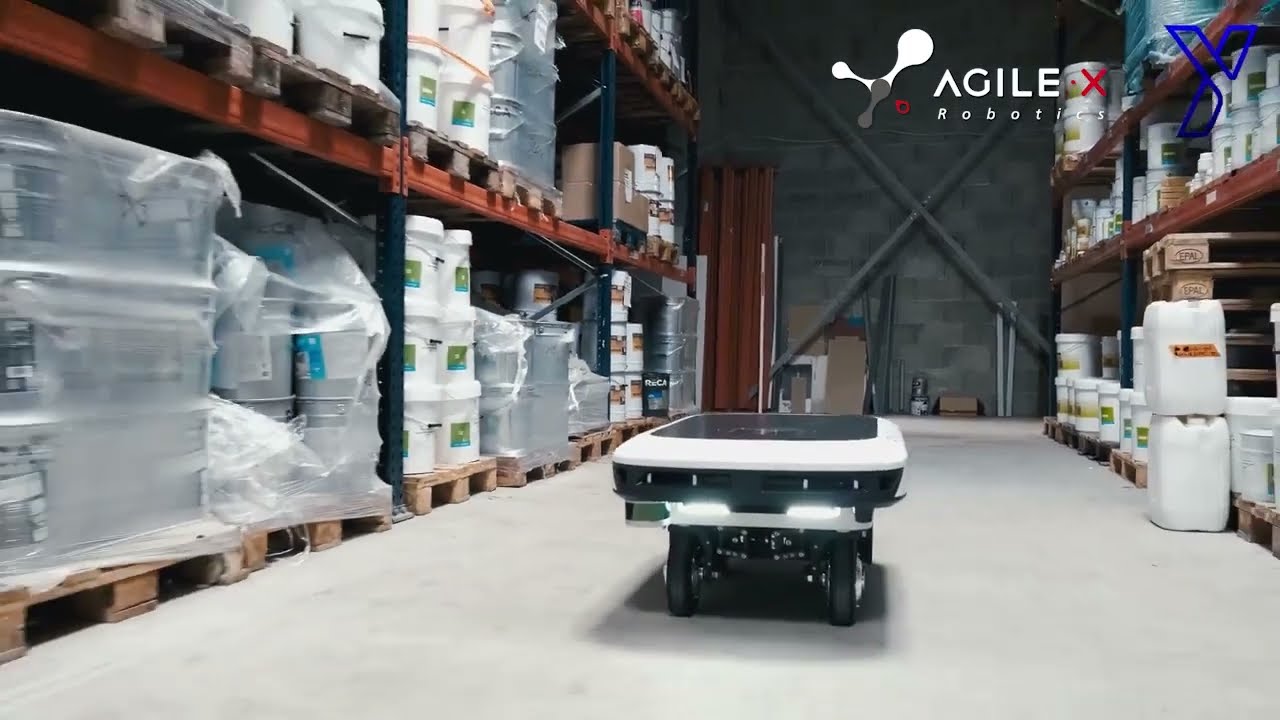
From warehouses and production lines to maintenance depots and industrial campuses, AgileX robots automate reliable intralogistics across diverse operational environments.

At a bus maintenance depot in China, a RANGER robot autonomously delivers tools and spare parts between the warehouse and repair bays, saving approximately 200 manual trips per day.

At the Monfalcone shipyard in Italy, BUNKER PRO 2.0 autonomously transports materials and tools between storage and production areas, ensuring reliable delivery across uneven indoor and outdoor routes.

A compact omnidirectional platform supports agile transport between storage areas, warehouse aisles, and production or service workstations where maneuverability and route flexibility are essential.

High-Payload Omnidirectional Mobile Robot
Learn More
Universal Mobile Robot
Learn More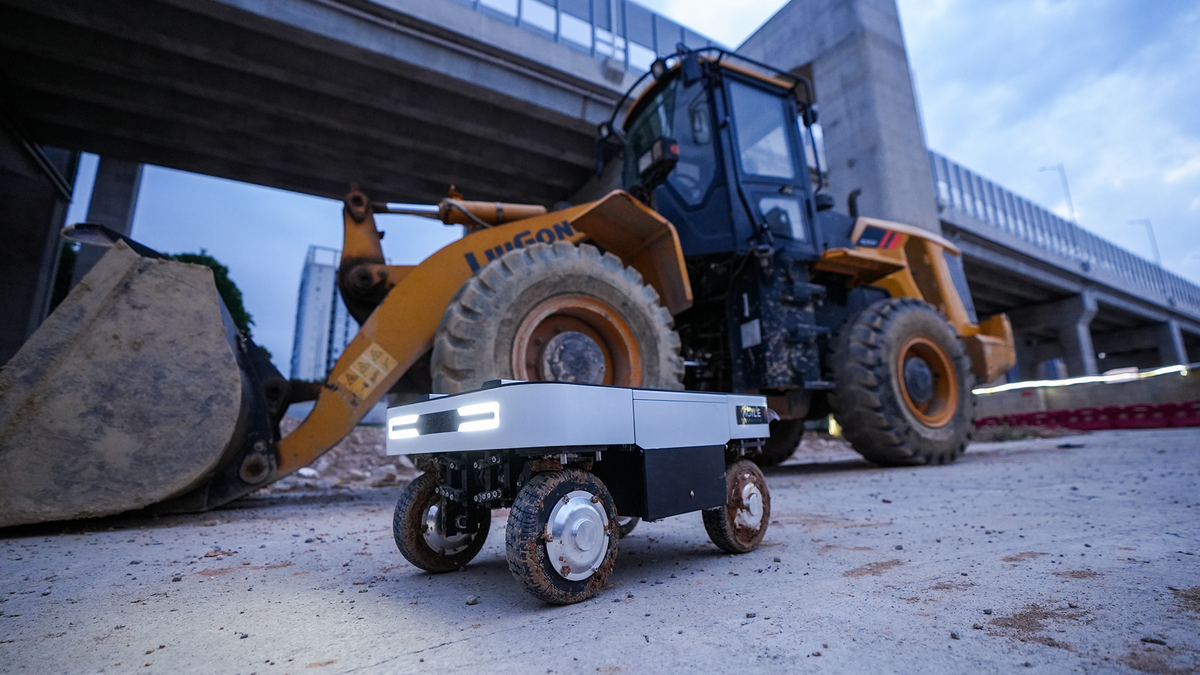
Compact Omnidirectional Mobile Robot
Learn MoreAutonomous intralogistics uses mobile robots, navigation, cargo equipment, and task workflows to automate the internal movement of materials within a facility. Typical applications include warehouse-to-workstation transport, line-side delivery, work-in-progress transfer, and maintenance parts delivery.
The solution can be configured for tools, spare parts, maintenance supplies, materials bins, production components, document packages, and other internal logistics items. Cargo modules can be adapted to the load, dimensions, access method, and operating workflow.
Yes. With the appropriate mobile robot platform and navigation configuration, the solution can support routes that connect warehouses, workshops, maintenance bays, outdoor roads, and other industrial areas.
Yes. Task logic can be configured around existing material-request, approval, warehouse, maintenance, or production-management processes. Integration requirements should be assessed according to the customer’s operating workflow and software environment.
Platform selection depends on payload, cargo size, terrain, route width, turning requirements, indoor-outdoor transitions, navigation needs, and the required operating duration.
Not necessarily. Autonomous mobile robots can navigate with onboard sensors and digital maps, allowing transport routes to be configured and adjusted without fixed guide paths. Site conditions and safety requirements should be assessed before deployment.
Connect with our robotics experts to discuss your automation needs and discover the perfect mobile platform for your business.
Your inquiry has been received. Our robotics engineers will get back to you as soon as possible.